
Most golfers have been there. You chunk a chip, skull a wedge, or pull a drive 30 yards left, and the immediate reaction is to replay the swing in your head on a loop for the next three holes. The mental spiral begins. Was it your grip? Your stance? Did you peek too early? Meanwhile, the real culprit is sitting right there on your hand, worn out and actively working against you on every shot.
Gear mistakes are some of the most common performance killers in recreational golf, and they are also the most overlooked. Not because golfers do not care about their equipment, but because it is way easier to spiral into swing analysis than to admit that the glove you have been gaming for six months might be the problem. Small gear decisions compound over the course of a round, and by the time you actually notice something is off, you have already dropped three shots you are never getting back.
Your Glove Isn’t Just an Accessory
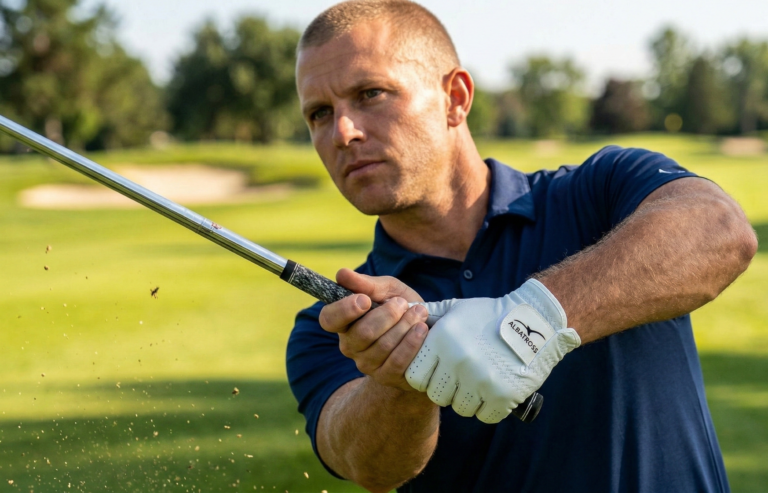
A lot of golfers treat the glove like it is optional. Something you throw on out of habit, maybe because you saw it on TV, or because it was sitting in the bag from last season and seemed fine enough. The truth is, a glove is one of the most direct connections between your body and the club, and when it is not doing its job, your hands start compensating in ways that wreck everything downstream.
Grip pressure is one of those things that quietly messes with your entire swing without announcing itself. When your glove does not provide proper traction, you squeeze harder. When you squeeze harder, your forearms tighten. When your forearms tighten, your timing falls apart, and the club path follows.
When Your Glove Is Done, You Will Know It
A glove that is past its prime changes how your hands behave from the first hole to the last. Most golfers do not catch it early because the decline is gradual. Watch for these signs:
- The palm area looks smooth or shiny from repeated friction
- Small tears forming near the thumb or index finger
- It takes effort to get the glove to sit snugly on your hand
- It feels stiff or restrictive within the first couple of holes
That last one matters more than most people realize. A stiff glove creates forearm tension before you even start your backswing. If your glove is fighting you before the club leaves your side, the swing you end up blaming was already compromised at the start.
Fit Is Not a Minor Detail
A glove that is too big creates bunching in the palm, which puts extra material between your hand and the grip. A glove that is too small restricts the range of motion and forces you to grip tighter than you should. Here is what a proper fit actually looks like:
- Snug across the palm with zero bunching
- No pulling at the knuckles when you close your hand
- Fingertips flush with the end of the glove, no extra material
- Velcro strap closes comfortably without straining
Most recreational golfers have never actually worn a properly fitting glove because they buy what is available and assume close enough is fine. It is not. The difference between a glove that fits and one that almost fits shows up in your score.
Playing the Wrong Glove for the Conditions
Weather affects your game in ways that go well beyond wind and turf. The glove that performs beautifully on a calm 75-degree morning is not the same glove that is going to carry you through a humid afternoon in July. Moisture makes leather slippery when the material is not built for it, and heat causes your hand to swell slightly over the course of a round in a way you may not consciously notice but will absolutely feel in your grip.
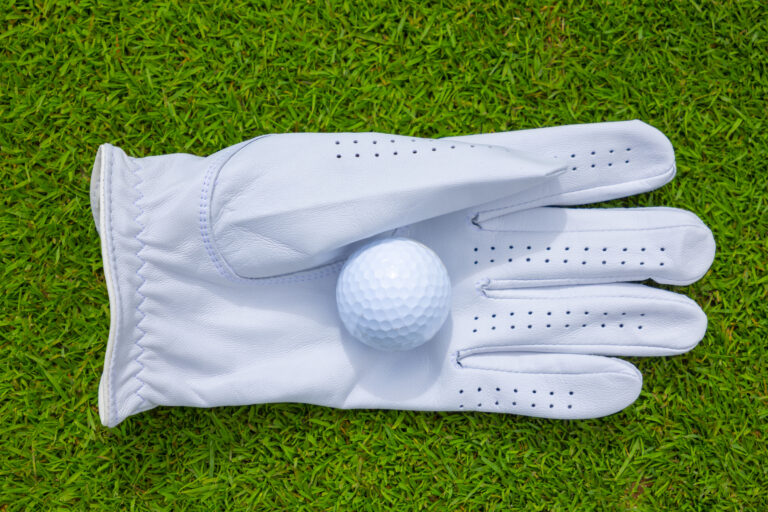
Cabretta leather is one of the best materials available because it molds to your hand and stays responsive through a round. But even the best material needs to match the conditions you are actually playing in.
Matching Your Glove to the Day
Keeping a couple of options in your bag is one of those small habits that experienced players develop early, and the rest of us figure out the hard way after a few frustrating rounds. Think of it this way:
- Warm and humid days: look for ventilated designs or moisture-resistant materials
- Cool and dry conditions: full cabretta leather for maximum feel and feedback
- Rain or early morning dew: a glove built for wet conditions will outperform a dry-weather glove every single time
If you are out there on a warm day and your grip keeps feeling like it is shifting between shots, it is probably not your technique falling apart. It is a combination of sweat and a glove that was never designed for those conditions.
The “One Glove Forever” Trap
Here is something that will probably sound extremely familiar. You find a glove you like, it feels great the first few times out, and you decide you are going to squeeze every last round out of it before buying another one. Three months later, that glove is basically a worn-out piece of fabric with a Velcro tab, but you are still using it because it feels broken in and comfortable.
There is a real difference between broken in and broken down. A glove that has softened and conformed to your hand after a handful of rounds is broken in. A glove with worn-through patches, stretched fingers, and no grip left is just broken.
Why Buying in Bulk Actually Fixes This
Most recreational golfers should be rotating through gloves far more frequently than they do, especially if they are playing multiple times a week. The reason most people do not is simple: cost. When you buy a single glove at a time, you protect it as if it were irreplaceable. When you stock up at a bulk price that actually makes sense, you stop rationalizing the bad ones and just swap. Your game reflects that almost immediately.
Overlooking the Hat-to-Sun Equation
This one sounds like a minor inconvenience until you spend three holes squinting into a late afternoon sun trying to track a ball you absolutely crushed off the tee. A hat that does not sit properly, blows off in any real wind, or has a flimsy brim is not just a style issue. It is a visibility and focus issue, and on a golf course, those two things matter more than most people admit. When you cannot track your ball flight properly, you guess.
Guessing leads to adjustments that make no sense, swing thoughts that go nowhere, and a level of mental frustration that is completely avoidable. A structured hat with a real brim that stays put through a full swing is practical equipment. The difference between watching your ball land and losing it in the glare can easily be the difference between a confident approach shot and an unnecessary penalty.
The Mental Tax of Bad Gear Over 18 Holes
Bad gear does not just affect your physical mechanics. It adds a low-level background irritation that builds over the course of a round in ways that are hard to measure but very easy to feel. When your glove does not feel right, you think about your grip. When your hat keeps shifting, you are adjusting it on the tee box. When your shirt is clinging to you in the heat, part of your brain is managing that instead of the shot in front of you.
None of these things feels significant on its own. But golf is one of the most mentally demanding recreational sports there is, and anything that chips away at your focus chips away at your score. The goal is to get to a point where your gear is so dialed in that you stop thinking about it entirely. That is when the swing thoughts actually have room to work, because your attention is not being pulled in three directions before you even address the ball.
Your Gear Should Work as Hard as You Do
The game is already hard enough without fighting your equipment from the first tee. At Albatross, we built this brand because we were tired of overpaying for gloves that gave up by the back nine. Everything we carry is tested on real courses by real weekend warriors who actually care about the game, not just the price tag.
Our All-Cabretta Leather Golf Gloves are designed to fit right, feel great, and last the way gear is supposed to. Stock up, ditch the worn-out ones, and finally give your swing the fair shot it deserves. Check out our store and play your next round in gear you can actually trust.